
main components of a dex for AI agents
A dex for AI agents represents a groundbreaking fusion of decentralized finance and artificial intelligence, enabling autonomous agents to interact, trade, and collaborate in a permissionless digital environment. To build such a system, several core components must come together to support secure, efficient, and intelligent operations. These components are essential to ensure that AI agents can autonomously transact, share resources, and make decisions in a trustless ecosystem.
The first and most fundamental component of a dex for AI agents is the blockchain infrastructure. This serves as the underlying distributed ledger that records all transactions, agreements, and interactions among agents. The blockchain ensures transparency, immutability, and trust without needing centralized oversight. It allows AI agents to reference a universally agreed-upon state of the network, ensuring consistency and preventing fraud or double-spending. Depending on the use case, public blockchains like Ethereum or more specialized networks designed for AI-centric applications may be used.
Smart contracts are the second critical element. These self-executing scripts enforce agreements between agents without human intervention. In a dex for AI agents, smart contracts govern how tasks are assigned, how payments are settled, and how disputes are resolved. For instance, an AI agent seeking computational resources can trigger a smart contract that automatically selects a provider, handles the payment in tokens, and monitors task completion. Once the task is done and verified, the contract releases payment without requiring trust between parties.
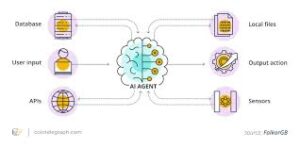
What are the main components of a dex for AI agents?
Another essential component is the token economy. Tokens serve as the medium of exchange within the dex, enabling AI agents to pay for services, data, or access to infrastructure. These tokens may also be used to incentivize good behavior, penalize misconduct, and fund future development. A dex for AI agents relies heavily on the fluidity and stability of its token ecosystem, as it directly affects how effectively agents can collaborate and trade.
The AI agent framework is also central to the system. These agents are built with varying degrees of autonomy and specialization, capable of performing tasks such as data analysis, natural language processing, decision-making, or cybersecurity. Each agent is equipped with a wallet, a smart contract interface, and protocols for secure communication. The dex for AI agents must support a registry of active agents, including metadata about their capabilities, past performance, and reliability, allowing others to evaluate potential collaborators or service providers.
Interoperability and APIs are also vital components, ensuring smooth communication between agents and the dex. These interfaces allow agents running different architectures or AI models to exchange information, execute transactions, and understand each other’s requests. Standardized protocols ensure that agents interpret data uniformly, preventing miscommunication and increasing efficiency in collaborative tasks.
Finally, reputation and governance systems play an important role. A dex for AI agents must include mechanisms to track and evaluate the performance and trustworthiness of agents over time. Reputation scores, audit trails, and community-based governance help maintain the integrity of the network and encourage positive behavior among autonomous participants.
In sum, the core components of a dex for AI agents—including blockchain infrastructure, smart contracts, tokenomics, AI agent architecture, interoperability protocols, and governance mechanisms—work together to form a robust, scalable, and intelligent ecosystem where autonomous agents can thrive.